

New Jersey Recovery Housing at Risk: Proposed Regulations Could Double Rents and Violate Labor Standards
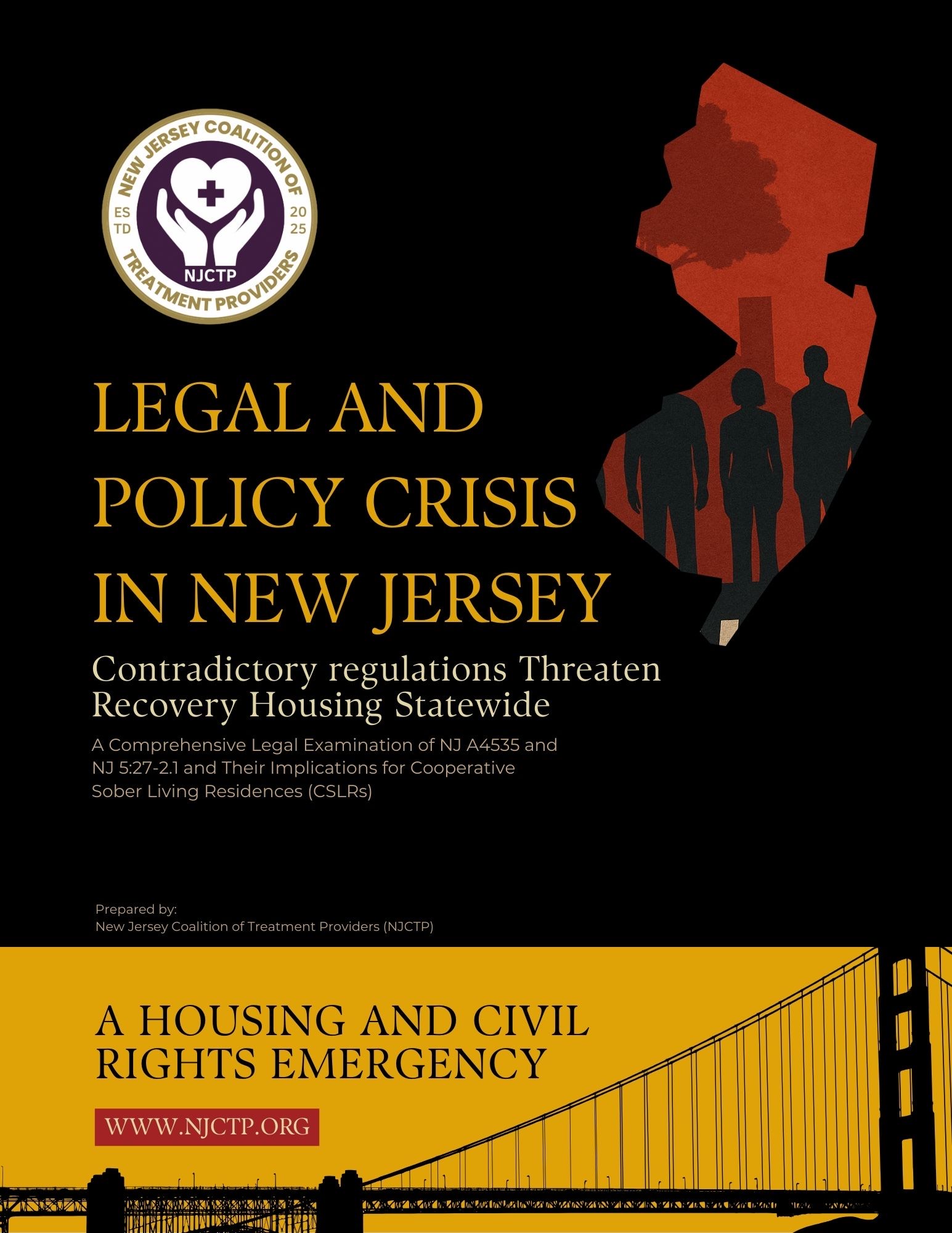
Under updated enforcement of NJAC 5:27-2.1 and Bill A4535, the DCA has begun applying institutional boarding-home requirements to Cooperative Sober Living Residences (CSLRs) peer-run homes historically recognized as residential environments protected by federal fair-housing law. The mandates require each home to employ both a live-in operator working 84 hours weekly and a separate 24/7 on call operator.
Labor rights experts state that compensating these roles with “free lodging” alone, as suggested by some officials, violates wage-and-hour laws and could expose providers to substantial liability.
Unaffordable and Unsustainable
With New Jersey’s minimum wage rising to $16 per hour in 2025, the required staffing structure would cost more than $7,000 per month per home, more than doubling resident rents from approximately $200 a week to more than $400.
“These requirements force housing providers into an impossible choice: violate labor statutes, shut down homes, or push crushing costs onto residents in early recovery,” said Daniel J. Regan, President of NJCTP. “Any of those paths would lead to less housing and worse outcomes.”
Policy at Odds with Itself
The DCA prohibits round-the clock rotating staff, widely considered a safer and more accountable model while simultaneously mandating a single individual work 84 hours per week.
A Return to Institutionalization
NJCTP argues that these rules contradict federal protections under the Fair Housing Amendments Act and Oxford House v. Cherry Hill (1992), effectively re-institutionalizing recovery housing and undermining decades of progress.
A Call for Immediate Action
NJCTP urges the State to:
1. Pause implementation of these mandates,
2. Conduct a legal and economic impact review in coordination with the Department of Labor, and
3. Clarify whether CSLRs are considered residential or commercial properties.
“If we do not correct course, we will face a preventable crisis of housing access for New Jerseyans working every day to reclaim their lives,” Regan added.
About the New Jersey Coalition of Treatment Providers
The New Jersey Coalition of Treatment Providers is a statewide alliance dedicated to expanding access to recovery housing, improving behavioral-health outcomes, and strengthening recovery-oriented systems of care. We believe every resident deserves safety, dignity, and a fair opportunity to heal.
Daniel J Regan
HealingUS Communities
email us here
Legal Disclaimer:
EIN Presswire provides this news content "as is" without warranty of any kind. We do not accept any responsibility or liability for the accuracy, content, images, videos, licenses, completeness, legality, or reliability of the information contained in this article. If you have any complaints or copyright issues related to this article, kindly contact the author above.
